
TL;DR
- BOLA and BFLA have topped or sat near the top of the OWASP API Security Top 10 since 2019, and authorization flaws remain a leading cause of real-world API breaches.
- The 2026 Lovable breach shows how one missing ownership check on an API endpoint exposed source code, credentials, and customer data across thousands of projects, with no exploit required.
- The true cost of a BOLA or BFLA incident goes far beyond breach response. It includes regulatory fines, audit remediation, engineering rework, customer churn, and cyber insurance premium increases.
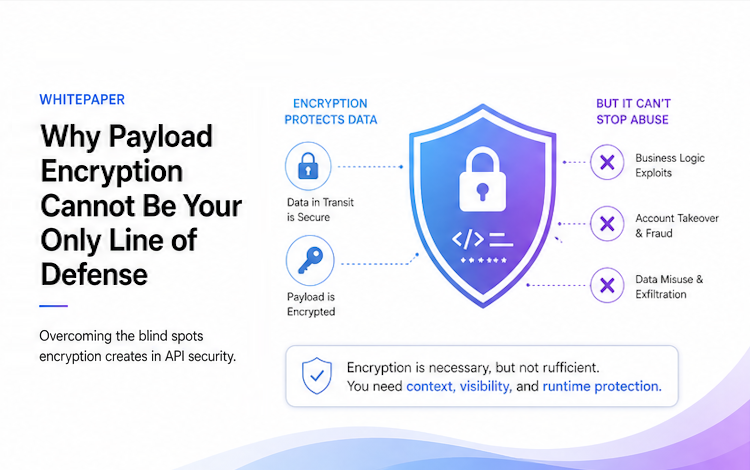
- Legacy tools like WAFs and API gateways check identity and traffic patterns, but they do not understand who should own which object or which function, so BOLA and BFLA slip through undetected.
- AppSentinels applies a Business Logic Graph to continuously map API business context and flag authorization abuse in real time, giving CISOs a quantifiable way to close this exposure.
Why BOLA and BFLA Stay at the Top of Every API Risk List
Every CISO managing an API estate has heard of Broken Object Level Authorization (BOLA) and Broken Function Level Authorization (BFLA). What is harder to pin down is what these vulnerabilities actually cost the business when they go unaddressed. Board members and finance teams want numbers, not acronyms, and that gap between technical risk and financial risk is where security budgets get lost.
BOLA has held the number one spot in the OWASP API Security Top 10 since the list was created in 2019. BFLA sits in the top five and shows up repeatedly in breach post-mortems across finance, healthcare, retail, and SaaS. Both flaws share a root cause: the API confirms who a user is but fails to confirm what that user is allowed to do or see.
What BOLA looks like in practice
BOLA occurs when an API accepts a request for a specific record, such as an account number, invoice ID, or user profile, without checking whether the requester actually owns that record. A customer viewing their own transaction history changes one digit in the request and pulls up someone else’s transaction history instead. No credentials are stolen. No malware is involved. The attacker simply asked the API a question it never should have answered.
The 2026 Lovable breach shows exactly how this plays out in production. A confirmed BOLA vulnerability in the AI app-building platform let any free-tier account holder call an API endpoint and retrieve source code, database credentials, AI chat histories, and customer data belonging to other users’ projects. The root cause was a single missing ownership check on a project endpoint, one line of logic that should have confirmed the caller owned the project before returning its data. It never asked. The flaw affected thousands of projects built before November 2025, and no exploit was required. A valid, properly authenticated request was simply pointed at someone else’s object ID.
What makes this incident worth studying is the speed at which it compounded. AI-native development platforms generate and ship API endpoints far faster than traditional development cycles, which means an unvalidated business logic assumption that might once have taken a quarter to accumulate risk now accumulates in a matter of hours. AppSentinels breaks down the full root cause here: The Lovable Breach Wasn’t a Hack. It Was a Missing Line of Logic.
What BFLA looks like in practice
BFLA is a role enforcement failure rather than a data ownership failure. A standard user sends a request meant for an administrator, such as deleting a record or changing a permission level, and the API executes it because it never verified the caller’s role. The two flaws often appear together in practice. An attacker uses BFLA to reach a bulk export or admin function, then uses BOLA to iterate through object IDs and pull data at scale. The same authorization discipline that would have stopped the Lovable exposure, verifying the caller against the specific object or function requested, closes both gaps at once.
The Hidden Costs CISOs Often Miss
Breach response is the visible cost. The hidden costs are what turn a contained incident into a multi-year drag on the security budget and the business.
Direct financial costs
Industry breach cost research consistently shows financial services and other regulated sectors paying well above the global average per incident, with breach costs in the United States running especially high due to regulatory penalties, legal exposure, and extended detection timelines. Multi-environment breaches, which is what most API-driven incidents become once data crosses cloud and on-premises systems, tend to cost more than single-environment ones.
Regulatory and compliance exposure
BOLA and BFLA incidents almost always intersect with data protection and financial regulation. For financial services and SaaS platforms handling payment or personal data, exposure typically touches PCI DSS, PSD2, DORA, GDPR, DPDP, FFIEC guidance, SEBI CSCRF, and IRDAI requirements depending on geography and sector. A single authorization gap can trigger findings across several of these frameworks simultaneously, multiplying audit scope and remediation timelines.
Operational and engineering costs
Once a BOLA or BFLA flaw is found, either through a red team, an audit, or a live incident, engineering teams typically have to re-review authorization logic across every endpoint that touches the affected object or function, not just the one that failed. This kind of retroactive audit consumes sprint capacity that was never budgeted and often surfaces additional latent flaws in the same code paths.
Reputational and customer trust costs
Authorization failures are easy for customers and journalists to understand: “anyone could see anyone else’s data” is a headline that does not require technical explanation. That clarity accelerates churn and makes renewal conversations harder, particularly for B2B platforms selling into security-conscious buyers.
Agentic AI and NHI amplification
As organizations connect AI agents and non-human identities (NHIs) to internal APIs through protocols like MCP, the blast radius of a single BOLA or BFLA gap grows. An agent with broad API access that inherits a broken authorization check can pull or act on data across many objects in seconds, turning what used to be a manual, rate-limited attack into an automated one.
A Framework for Quantifying BOLA/BFLA Risk
CISOs building a business case for API authorization controls need a repeatable way to translate technical exposure into financial terms. A practical framework covers five inputs:
| Risk factor | What to measure | Why it matters to the business case |
| Exposed object volume | Number of records reachable per vulnerable endpoint (customer accounts, transactions, health records) | Determines breach scale and notification cost |
| Function sensitivity | Whether the exposed function reads, writes, or deletes data, and whether it touches money movement | Determines severity and likely regulatory response |
| Compliance overlap | Which frameworks apply to the exposed data (PCI DSS, GDPR, DPDP, DORA, and others) | Determines fine exposure and audit scope |
| Detection gap | Time your current tools would take to notice abnormal object or function access | Determines dwell time and containment cost |
| Blast radius with automation | Whether an AI agent or automated client can reach the same endpoint | Determines how fast a manual flaw becomes a mass-exploitation event |
Scoring each API against these five factors gives security leaders a defensible way to prioritize remediation and to justify investment in tooling that goes beyond perimeter defense.
Why Legacy Tools Miss BOLA/BFLA
Teams that have already invested in a WAF or API gateway often assume that investment covers authorization risk. It does not, and this is worth stating plainly to any team evaluating new spend. WAFs and signature-based scanners are built to catch known attack patterns such as SQL injection or malformed payloads. Gateways manage routing, rate limiting, and authentication tokens. A BOLA or BFLA request looks completely normal to both. It is properly authenticated, properly formatted, and sent over an approved endpoint. The only thing wrong with it is the business logic decision behind it, and that decision sits above what perimeter tools are designed to inspect. Closing this gap means adding a layer purpose-built to understand business logic, not replacing the tools already in place.
How AppSentinels Closes the Gap with a Business Logic Graph
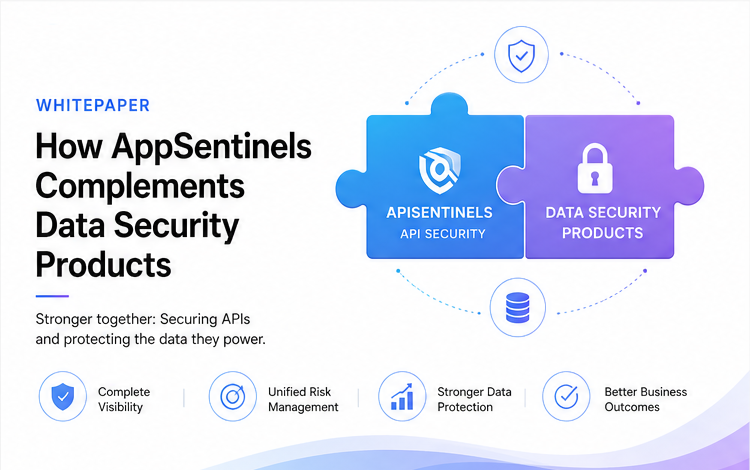
AppSentinels was built around a Business Logic Graph (BLG) model, which is a fundamentally different approach from perimeter-focused tools. Instead of matching traffic against known attack signatures, AppSentinels continuously maps API business context, including which users own which objects and which roles should reach which functions, then flags deviations from that expected behavior in real time.
This gives security teams three things a WAF or gateway cannot provide on its own:
- Continuous API discovery, so shadow APIs and zombie APIs that were never inventoried do not become blind spots for BOLA and BFLA.
- Runtime detection of authorization abuse, catching object and function-level violations as they happen rather than relying on periodic penetration tests.
- Coverage for non-human identities and AI agents, extending the same object and function-level checks to machine clients as usage shifts toward agentic AI and MCP-connected systems.
For CISOs at financial services and enterprise SaaS organizations, this means the quantified risk from the framework above maps directly to a control that addresses it, rather than sitting on a roadmap waiting for the next audit finding to force the conversation.
BOLA/BFLA Risk Quantification Checklist for CISOs
Use this checklist when evaluating exposure or building a business case for new controls:
- Have you inventoried every API endpoint that returns or modifies user-specific or account-specific data?
- Can your current tools distinguish between a legitimate request and an authenticated user requesting someone else’s object?
- Do you know which endpoints are reachable by AI agents or automated clients, and whether those clients inherit the same authorization gaps as human users?
- Have you mapped which compliance frameworks apply to the data behind each high-risk endpoint?
- Do you have a way to detect authorization abuse at runtime, rather than relying solely on periodic testing?
- Has your last penetration test or red team exercise specifically tested for BOLA and BFLA, not just authentication bypass?
- Could your team quantify, in financial terms, the exposure from your three highest-risk API endpoints today?
See how AppSentinels quantifies and closes your BOLA/BFLA exposure. Book a demo.
Frequently Asked Questions
BOLA happens when an API fails to verify that a user owns the specific object they are requesting, such as another customer’s account record. BFLA happens when an API fails to verify that a user’s role permits the function they are calling, such as an admin-only delete action. AppSentinels treats both as business logic failures and monitors for them at runtime rather than relying on signature-based detection alone.
These tools inspect traffic patterns and enforce authentication, but they do not understand business context, such as which user should own which record. AppSentinels closes this specific gap with a Business Logic Graph, which continuously maps ownership and role relationships across your API estate.
Score each exposed endpoint against object volume, function sensitivity, compliance overlap, detection gap, and automation blast radius. AppSentinels supports this process by surfacing which endpoints are exposed, which data they touch, and how quickly abnormal access would be detected.
Yes. When AI agents or automated systems connect to internal APIs through protocols like MCP, they inherit whatever authorization gaps already exist. AppSentinels extends object and function-level monitoring to non-human identities so agentic AI does not become a new path to the same old vulnerability.
Authorization failures frequently trigger findings across multiple regulatory frameworks at once. AppSentinels helps security and compliance teams map which endpoints touch regulated data and provides the runtime visibility auditors expect when assessing controls against PCI DSS, DORA, GDPR, DPDP, PSD2, FFIEC guidance, SEBI CSCRF, and IRDAI requirements.