
Key Takeaways
- A ServiceNow endpoint required no authentication, exposing customer data to anyone who asked, with no exploit required
- Standard defenses (WAFs, SIEMs) saw nothing wrong because the requests were technically valid; the failure lived in the authorization logic, not the protocol
- This is a business logic vulnerability: the most common, most damaging, and most invisible class of API risk
- AppSentinels’ Business Logic Graph maps and continuously red-teams exactly these gaps across your entire API estate
On June 5, 2026, ServiceNow quietly pushed a security update to hosted customer instances. The fix, described in an internal knowledge base article, addressed a flaw that let unauthenticated users gain more access to ServiceNow-hosted data than they were ever supposed to have. No password. No credentials. The remediation itself tells the whole story: ServiceNow changed an endpoint configuration to restrict access to authenticated users only.
Read that again. The patch wasn’t a memory-corruption fix or a novel exploit chain. It was a boundary that should have required authentication and didn’t.
By June 10, the situation had widened beyond ServiceNow’s initial framing. The company pointed to Australian customer instances, yet defenders outside Australia reported evidence of external access in their logs, and a specific IP address began circulating as an indicator of compromise. As of this writing, it remains unclear who reached the data, what they took, or how long the door was open. For a platform that stores IT and HR workflows (support tickets stuffed with passwords, keys, and credentials), that uncertainty is the expensive part.
This is Not a Mythical Threat
There’s a temptation to file every breach under sophisticated adversary or AI-powered attack. This one doesn’t qualify. An endpoint exposed data to anyone who asked because the access rule was wrong. That’s a business logic failure, specifically a broken authorization control, and it’s one of the most common, most damaging, and most overlooked classes of risk in modern software.
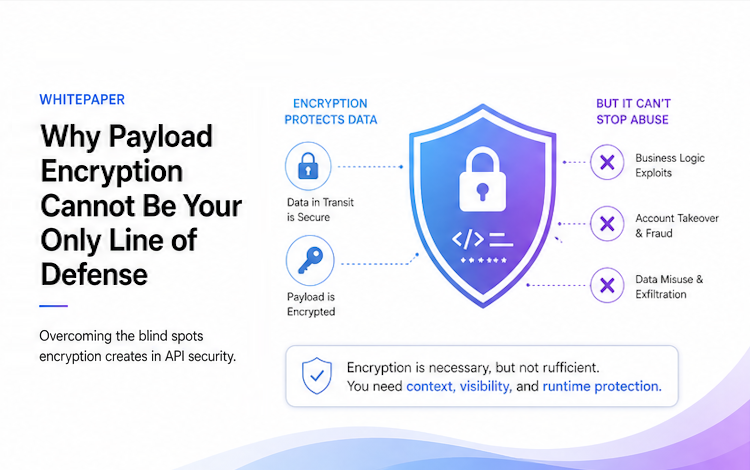
Here’s why these slip through. A WAF inspects the request and sees nothing malformed: valid path, valid method, well-formed payload. A SIEM logs the call and sees nothing anomalous: it looks like normal traffic, because it is normal traffic. The request is legitimate at the protocol layer. The problem is whether “this caller” should be allowed to touch “this object”. Neither the firewall nor the log pipeline understands ownership, so neither one can see the abuse.
Business Logic is the Blind Spot
This is exactly the gap we built AppSentinels to close. AI and low-code platforms ship endpoints faster than ever, but they can’t write the ownership logic, who is allowed to see what, because that lives in business rules, not in code generation. Our Business Logic Graph maps every endpoint, every object, every ownership relationship, and every access path across an API estate. Then it continuously red-teams that map for the failures that matter: missing authentication, broken object-level and function-level authorization, privilege escalation chains, and intent violations.
An unauthenticated endpoint serving customer data is precisely the kind of finding that surfaces before an attacker, or a Reddit thread surfaces it for you.
The ServiceNow incident is a reminder that the hardest problems in API security aren’t exotic. They’re authorization questions hiding in plain sight. You don’t need a mythical adversary to lose data. You just need one endpoint that forgot to ask who’s calling.
Request a demo to see what your current tools are missing and how AppSentinels finds them before someone else does.
Frequently Asked Questions
1. What is broken authentication on an API endpoint, and how does it happen?
2. What is a business logic vulnerability, and how is it different from a CVE?
3. How does AppSentinels detect missing or broken authentication on API endpoints?
4. Why don’t existing tools like WAFs or SIEMs catch broken authorization?
5. How common are business logic and authorization failures compared to other API vulnerabilities?